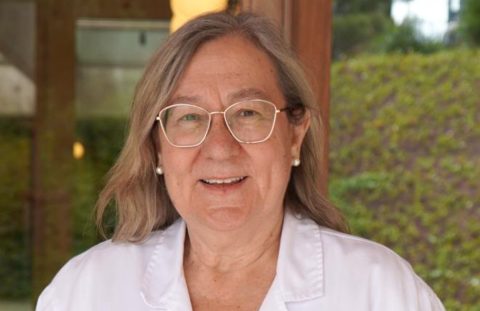
María López Lasanta: “We aim to help doctors choose the most effective treatment from the beginning”
Bringing research closer to patient care is a key objective of the DocTIS project. By integrating clinical expertise with molecular and computational approaches, the project seeks to better understand treatment response and to develop more precise therapeutic strategies for patients with six immune-mediated inflammatory diseases (IMIDs).
As coordinator of DocTIS, the Vall d’Hebron Research Institute (VHIR) plays a central role in connecting clinical practice with research activities across the consortium. Through its close link with Vall d’Hebron University Hospital, VHIR contributes to patient recruitment, clinical characterisation and the generation of high-quality data and biological samples that underpin the project’s scientific work.
In this interview, part of a series featuring young researchers involved in DocTIS, we speak with María López Lasanta MD, PhD, and rheumatologist at Vall d’Hebron University Hospital and researcher at VHIR, who contributes to the project through patient selection and recruitment, clinical phenotyping and obtention of biological samples.
Hola, María. Please tell us about yourself.
Hola! I am a rheumatologist at the Rheumatology Department, Vall d’Hebron University Hospital in Barcelona, where I combine clinical practice with research at the Vall d’Hebron Research Institute (VHIR). My main area of expertise is rheumatoid arthritis, particularly early arthritis and patient stratification. I’m also focus in studying the synovial tissue from subclinical inflammation, remission and reactivation,
I have developed my research career within the IMID Consortium and the Rheumatology Research Group at VHIR led by Prof Sara Marsal, working closely on large patient cohorts and biobanking initiatives. This environment has allowed me to focus on understanding disease heterogeneity and treatment response in immune-mediated inflammatory diseases.
How did you become involved in the DocTIS project?
I became involved in DocTIS through my ongoing work within the IMID Consortium at Vall d’Hebron.
Given my experience in patient cohorts and the clinical characterisation of rheumatoid arthritis, I joined the project as part of the clinical team contributing initially to patient selection and more recently in the RA recruitment for the DocTIS Clinical Trial. What motivated me most was the opportunity to participate in a European initiative aiming to translate clinical and molecular data into more precise therapeutic strategies.
What is your role within DocTIS?
My role in DocTIS focuses on patient selection and clinical phenotyping, particularly in rheumatoid arthritis. At the initial stages of the project, I was involved in identifying well-characterised responders and non-responders to targeted therapies, ensuring high-quality clinical data, and coordinating with the IMID-Biobank for sample availability.This step is crucial, as it lays the foundation for the molecular analyses that follow.
I have also been deeply involved in the latest stage of the project as a PI at Vall Hebron University Hospital site in the DocTIS Clinical Trial. We have been selecting patients with rheumatoid arthritis and psoriasis arthritis that fulfil the inclusion criteria of the Clinical Trial in other to test the efficacy and safety of the combinatorial therapy identified in the project.
How would you explain your research in DocTIS to someone outside science?
In simple terms, we are trying to answer a key question: why do some patients respond very well to a treatment while others do not?
To do this, we carefully select patients and collect both clinical information and biological samples. By analysing this data, we aim to better understand the disease and help doctors choose the most effective treatment for each patient from the beginning.
What do you find most innovative about the DocTIS approach?
What I find most innovative is the integration of clinical expertise with advanced molecular technologies within a systems biology framework. The project also goes beyond studying single diseases or treatments by exploring shared mechanisms across different immune-mediated diseases, which opens the door to more effective and potentially combinatorial therapies.
What has been your biggest challenge so far?
One of the main challenges has been achieving highly standardised patient selection across multiple centres and diseases. Ensuring that responders and non-responders are clearly defined and comparable requires careful clinical evaluation and strict criteria, which is essential for obtaining meaningful and reproducible results.
What achievement within DocTIS has been most satisfying for you?
One of the most rewarding aspects has been contributing to the selection of well-defined patient cohorts that will be used for downstream molecular analyses. Knowing that this work is essential for understanding treatment response and could ultimately influence future therapeutic decisions is very motivating.
What does it mean for you, as an early-career researcher, to see your work potentially translated into clinical trials or patient care?
As a clinician, being part of a project that connects research with real patient care is especially meaningful. It reinforces the idea that every piece of data we collect can contribute to improving how we treat patients in the future, making research directly relevant to daily clinical practice.
How has working in a European consortium influenced your development as a researcher?
Working in a European consortium has been a very enriching experience. It has allowed me to collaborate with experts from different disciplines, gain new perspectives, and better understand how multidisciplinary approaches can address complex clinical problems.
How do you think DocTIS could impact patients in the future?
DocTIS has the potential to significantly improve patient outcomes by enabling more personalised treatment approaches. By identifying mechanisms of response and new combinatorial strategies using targeted therapies already approved we may be able to offer to IMID patients the most effective therapy earlier in their disease course, before to be refractories to different drugs.
What key lessons have you learned from being part of DocTIS?
One of the key lessons has been the importance of integrating clinical and molecular data. I have also learned that collaboration, especially across disciplines and countries, is essential to tackle complex diseases like immune-mediated inflammatory conditions.
Where do you see your research career heading in the future?
I aim to continue developing a career that integrates clinical work with research in rheumatoid arthritis and related diseases. My goal is to contribute to more personalised medicine approaches and to participate in projects that have a direct impact on patient care.
If you were not working in research, what career path do you think you would pursue?
If I were not involved in research, I would still pursue a clinical career in medicine. However, I believe research is an essential part of improving patient care, as it allows us to continuously advance our understanding of disease and treatment.
María’s work highlights the essential role of clinical expertise in projects like DocTIS, where high-quality patient selection and characterisation are key to generating meaningful scientific results.
By linking clinical practice with molecular research, DocTIS is advancing towards more personalised and effective treatment strategies for patients with immune-mediated inflammatory diseases.
Coordinated by the Vall d’Hebron Research Institute, VHIR (Sara Marsal), the project brings together Cardiff University (Ernest Choy), the University of Verona (Giampiero Girolomoni), Charité – Universitätsmedizin Berlin (Britta Siegmund), the Institut d’Investigacions Biomèdiques August Pi i Sunyer, IDIBAPS (Pere Santamaria), the National Center for Genomic Analysis, CNAG (Holger Heyn), IMIDomics Inc. (Manuel Lopez-Figueroa), HudsonAlpha Institute for Biotechnology (Richard M. Myers) and Zabala Innovation.