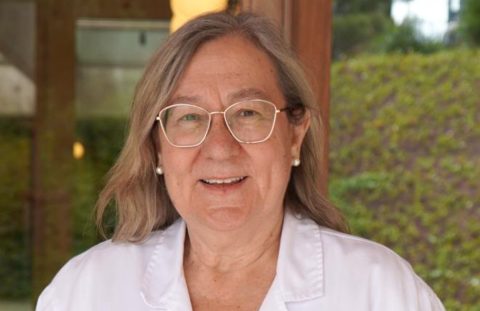
Pere Santamaria: “By combining drugs intelligently, patients who do not respond to monotherapies can be helped”

The DocTIS project is an international EU-funded collaboration bringing together leading biomedical institutions from Spain, Sweden, Italy, Germany, the UK and the US. Through precision-focused, systems biology approaches, its mission is to improve treatment efficacy for six major immune-mediated inflammatory diseases (IMIDs): Crohn’s disease, ulcerative colitis, rheumatoid arthritis, systemic lupus erythematosus, psoriasis and psoriatic arthritis.
By generating and analysing large-scale omics data from well-characterised patient cohorts, integrating clinical, molecular and computational insights, DocTIS aims to identify drug combinations that surpass existing monotherapies in efficacy, safety and durability. Now in its final phase, the project is transitioning from data generation and preclinical validation to clinical trials in Spain and the UK, with the goal of confirming its innovative therapeutic strategies in patient care.
Among the core partners in this consortium, the Institut d’Investigacions Biomèdiques August Pi i Sunyer (IDIBAPS) leads the Preclinical Validation of Combinatorial Therapies work package, which is a central component of the DocTIS translational pipeline. This work is carried out by the Pathogenesis and Treatment of Autoimmunity research group, led by Pere Santamaria, who combines this role with his position as Professor in the Department of Microbiology, Immunology and Infectious Diseases at the University of Calgary’s Cumming School of Medicine in Canada.
IDIBAPS is responsible for testing the therapeutic efficacy and potential toxicity of selected combinatorial therapies using a broad portfolio of autoimmune and inflammatory disease models. These include spontaneous systemic lupus erythematosus, experimental and spontaneous arthritis, experimental colitis, spontaneous Crohn’s disease-like ileitis and psoriasis. These models are well established in the laboratories of Santamaria and his colleague at IDIBAPS, Pau Serra.
We speak with Pere Santamaria, leader of the IDIBAPS Pathogenesis and Treatment of Autoimmunity group, to discuss how this preclinical expertise has shaped DocTIS and how his team’s work contributes to the project’s mission to improve outcomes for patients with IMIDs.
Hi, Pere! Please, tell us about yourself.
Over the years, my lab has developed extensive expertise in the development and implementation of animal models of autoimmunity/chronic immune-mediated inflammation. We are interested in the development of antigen-specific, disease-modifying therapies for these disorders and in dissecting the immunoregulatory pathways that are capable of resolving autoimmune inflammation without compromising normal immunity. With regards to DocTIS, our lab has adapted animal models of diseases of interest to address its preclinical needs.
What initially drew you to the DocTIS project?
Project coordinator Sara Marsal, from VHIR, reached out to me. They had contacted a Contract Research Organisation (CRO), but apparently there were doubts about the ability of the CRO to deliver the project’s needs under the available budget. She asked if I thought I could help. Given our technical expertise in animal model development and our longstanding interest in autoimmunity, I agreed to join DocTIS.
What role does your organisation play in the DocTIS project?
My lab is responsible for testing combinations of biologics approved for human use, in animal models of disease of interest.
What is the key innovation you are contributing to?
We can simultaneously study multiple animal models of autoimmune disease as well as produce the required amounts of the relevant drugs. This is not something most laboratories can do.
Regarding your initial expectations, how has the project developed?
I find the DocTIS project exciting because it brings together different areas of expertise to address a complex problem relevant to personalised medicine.
DocTIS requires a lot of work and many complementary skills. The consortium has done a great job executing the project, and I am happy to be part of it.
What has been the biggest challenge for you and your team?
The budget was constrained for the amount of work and the costs associated with establishing all these strains, the readouts of disease activity and therapeutic activity, and the production of the drugs. That was a challenge: adapting the needs of the project to the budget. In research there are always unexpected problems that must be sorted out. We have run into a few of those, but overall, I am happy that we have been able to deliver what we said we would deliver. I hope my colleagues are pleased as well.
What results from the project have been most satisfying for you?
My role in the project is more of a supporting one, enabling decision-making on what combinations to test and providing preclinical data to support the rationale for a clinical trial. This is satisfying because translation is important. You can do a lot of experiments in mice and not move the needle, but in this case, I am happy that our work has helped rationalise a treatment that is now being tested clinically. That will be rewarding.
The clinical trials have started — what are your expectations?
It will be rewarding to see the clinical outcome. The goal is to support decision-making on combinations that may work better for patients who do not respond to monotherapies.
How do you think DocTIS could help improve the quality of life for IMID patients in Europe?
Patients today only have access to the drugs that are approved, and some do not respond well to these drugs. The question is what can be done with existing drugs to improve outcomes. DocTIS tries to address whether non-responsiveness can be mitigated by combinations of existing drugs. Perhaps by combining them intelligently, patients who do not respond to monotherapies can be helped.
That is the present. For the future, other avenues may modify the disease process rather than just suppress consequences.
What key learnings do you take from the DocTIS collaboration?
In the collaboration you interact with people who have different perspectives and unique insights. It is rewarding to work with people who know things you do not know. I expected to learn something I did not know, and that has been rewarding. The general value of learning and collaborating makes your work more satisfying than simply doing the things you want to do.
Is there anything about your team you would like to highlight?
Many people in the team have been involved, including the animal care technicians who breed the animals and the manager of the animal group. But the person who has done most of the work, essentially 90% or more, is Edgar Angelats, a postdoc in our lab. Without him we would not have been able to do this. His contribution has been essential.
As Pere Santamaria’s perspective demonstrates, the strength of DocTIS lies in its ability to connect complementary expertise across disciplines, institutions and countries. The project’s progress reflects the value of combining advanced clinical insight, preclinical modelling and large-scale molecular data to address the complexity of immune-mediated inflammatory diseases. Santamaria’s work at IDIBAPS provides the essential preclinical foundation that allows the consortium to evaluate the therapeutic potential of innovative drug combinations before they reach clinical testing.
Coordinated by the Vall d’Hebron Research Institute, VHIR (Sara Marsal), the DocTIS consortium brings together Cardiff University (Ernest Choy), the University of Verona (Giampiero Girolomoni), Charité – Universitätsmedizin Berlin (Britta Siegmund), the Institut d’Investigacions Biomèdiques August Pi i Sunyer, IDIBAPS (Pere Santamaria), the National Center for Genomic Analysis, CNAG (Holger Heyn), IMIDomics Inc. (Manuel Lopez-Figueroa), HudsonAlpha Institute for Biotechnology (Richard M. Myers) and Zabala Innovation. Each partner contributes unique scientific or technical strengths to a shared mission:improving the lives of people living with IMIDs by developing safer and more effective personalised therapies.