Yolanda Guillén: “I want to help patients live one day without pain and suffering”
A major challenge in immune-mediated inflammatory diseases (IMIDs) is understanding why patients respond differently to the same treatment. DocTIS addresses this by exploring the molecular activity of immune cells, using advanced technologies to identify the biological mechanisms linked to treatment response and resistance.
Focusing on diseases such as rheumatoid arthritis, psoriatic arthritis, psoriasis, ulcerative colitis, Crohn’s disease and systemic lupus erythematosus, the project combines high-resolution molecular data with computational analysis to uncover new therapeutic opportunities, including improved ways of using existing drugs.
IMIDomics, a biotechnology company dedicated to discovering and developing new therapies for IMIDs, particularly for patients who do not respond to current treatments, is one of the partners contributing to this effort. Within this context, the company plays a key role in generating and analysing complex molecular datasets, helping to bridge the gap between biological knowledge and clinical application.
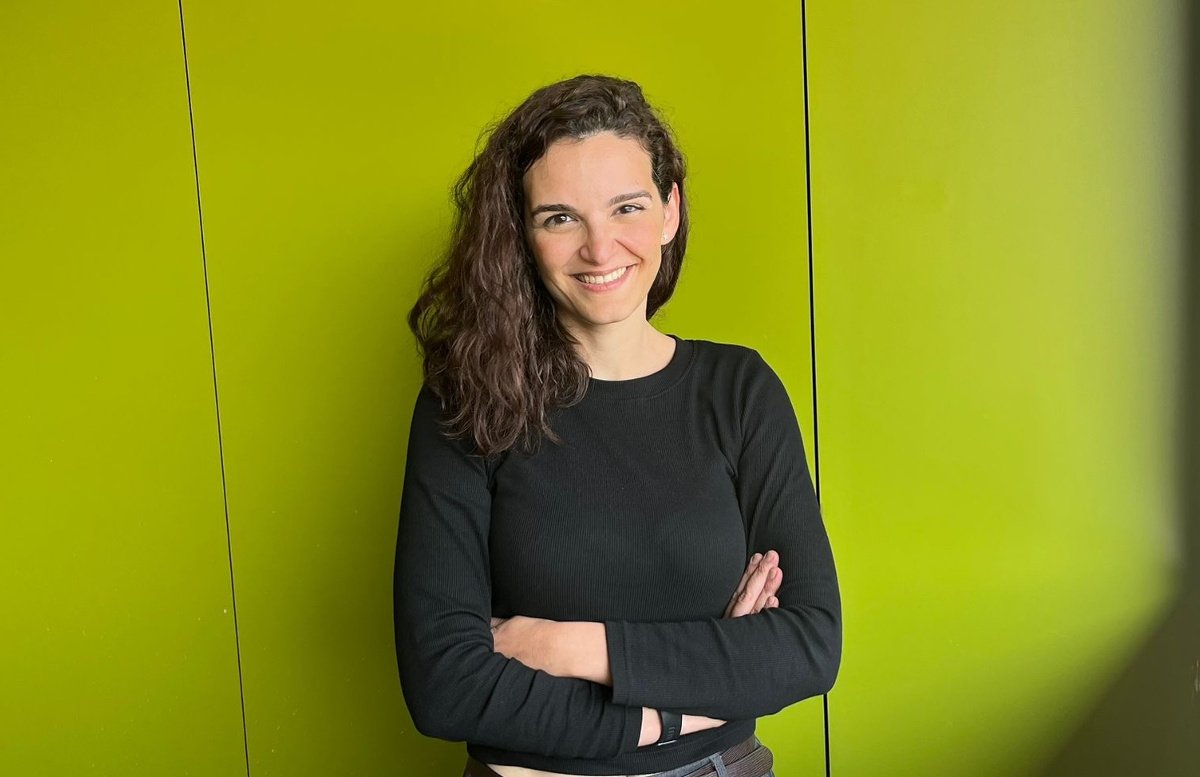
In this interview, part of a series featuring young researchers involved in DocTIS, we speak with Yolanda Guillén, Bioinformatics Scientist at IMIDomics, who works on transcriptomics analysis and the development of computational approaches to better understand drug response.
Hola, Yolanda. Please tell us about yourself.
Hola! I currently work as a Bioinformatics Scientist at IMIDomics in Barcelona, where I analyse clinical and genetic data from patients with immune-mediated inflammatory diseases to identify potential drug targets.
Before this, I completed my PhD in Evolutionary Genetics. I have a strong background in Next Generation Sequencing technologies, which I have applied in different research areas, from studying the gut microbiome in HIV patients to investigating the molecular mechanisms involved in haematopoiesis and cancer progression.
How did you become involved in the DocTIS project?
I joined the project about one year after it started, shortly after I became part of the bioinformatics team at IMIDomics, which is one of the key partners in DocTIS.
What is your role within DocTIS?
I am involved in several tasks related to the computational analysis of transcriptomics data. On the one hand, I contributed to the development of a computational method to select optimal drug combinations.
On the other hand, I am working on generating a single-cell atlas to better understand the molecular patterns associated with drug response.
How would you explain your research in DocTIS to someone outside science?
Our goal is to understand why some patients do not respond to current treatments.
To do this, we analyse immune cells from patient blood samples to identify the mechanisms that are activated or suppressed when a patient does not reach remission. Based on this information, we can propose combination therapies to improve the effectiveness of the drugs that are already available.
What do you find most innovative about the DocTIS approach?
One of the most innovative aspects is the combination of cutting-edge molecular technologies, such as single-cell RNA sequencing, proteomics and genomics, with new computational strategies that have not been previously applied in autoimmune diseases.
We have also built a database integrating clinical and molecular data from a large number of patients. All of this has been possible thanks to the collaboration between different research groups.
What has been your biggest challenge so far?
The biggest challenge has been integrating the large volume of multi-omics data to identify an optimal combination therapy.
With so much clinical and molecular information available, selecting the most appropriate analytical strategy among many possible approaches has been particularly complex.
What achievement within DocTIS has been most satisfying for you?
For me, the most satisfying achievement has been seeing how our computational work can translate into clinical action.
After proposing an optimal drug combination based on our molecular analyses, we worked together with a clinical team to explore the development of a clinical trial. It was very rewarding to see that our bioinformatics results were considered robust enough to be tested in a real clinical setting.
How do you think DocTIS could impact patients in the future?
If the selected drug combination proves to be more effective than current therapies in clinical trials, this could lead to changes in clinical guidelines.
In addition, our work could demonstrate that analysing immune cells from blood samples is a valuable approach to understanding how patients respond to treatment.
Where do you see your research career heading in the future?
I would like to continue contributing to the development of new therapies and treatments.
My goal is to help patients with diseases that are currently difficult to treat, so that one day they can live without pain or suffering. It is an ambitious goal, but it is what motivates my work.
If you were not working in research, what career path do you think you would pursue?
My second choice after finishing high school was aeronautical engineering, so I would probably be working with airplanes in some way, maybe assembling or dismantling them.
Yolanda’s work illustrates how analysing immune cells at high resolution can reveal key mechanisms driving treatment response in patients with immune-mediated inflammatory diseases.
By combining molecular profiling with advanced computational methods, DocTIS is opening new avenues to refine therapeutic strategies and support more informed clinical decision-making.
The project brings together a multidisciplinary consortium coordinated by the Vall d’Hebron Research Institute, VHIR (Sara Marsal), including Cardiff University (Ernest Choy), the University of Verona (Giampiero Girolomoni), Charité – Universitätsmedizin Berlin (Britta Siegmund), the Institut d’Investigacions Biomèdiques August Pi i Sunyer, IDIBAPS (Pere Santamaria), the National Center for Genomic Analysis, CNAG (Holger Heyn), IMIDomics Inc. (Manuel Lopez-Figueroa), HudsonAlpha Institute for Biotechnology (Richard M. Myers) and Zabala Innovation.