Nerea Clemente: “Working in DocTIS has shown me how complex it is to move from research to clinical application”
Understanding and improving treatment strategies for immune-mediated inflammatory diseases (IMIDs) is at the core of the DocTIS project. By combining systems biology approaches with advanced clinical and molecular data, DocTIS aims to identify more effective therapeutic strategies, particularly through combinatorial treatments tailored to different patient profiles.
Delivering this ambition requires not only scientific excellence, but also strong coordination across a large and diverse consortium. In this context, Zabala Innovation plays a key role in supporting the overall management of the project, while also contributing to communication and dissemination activities.
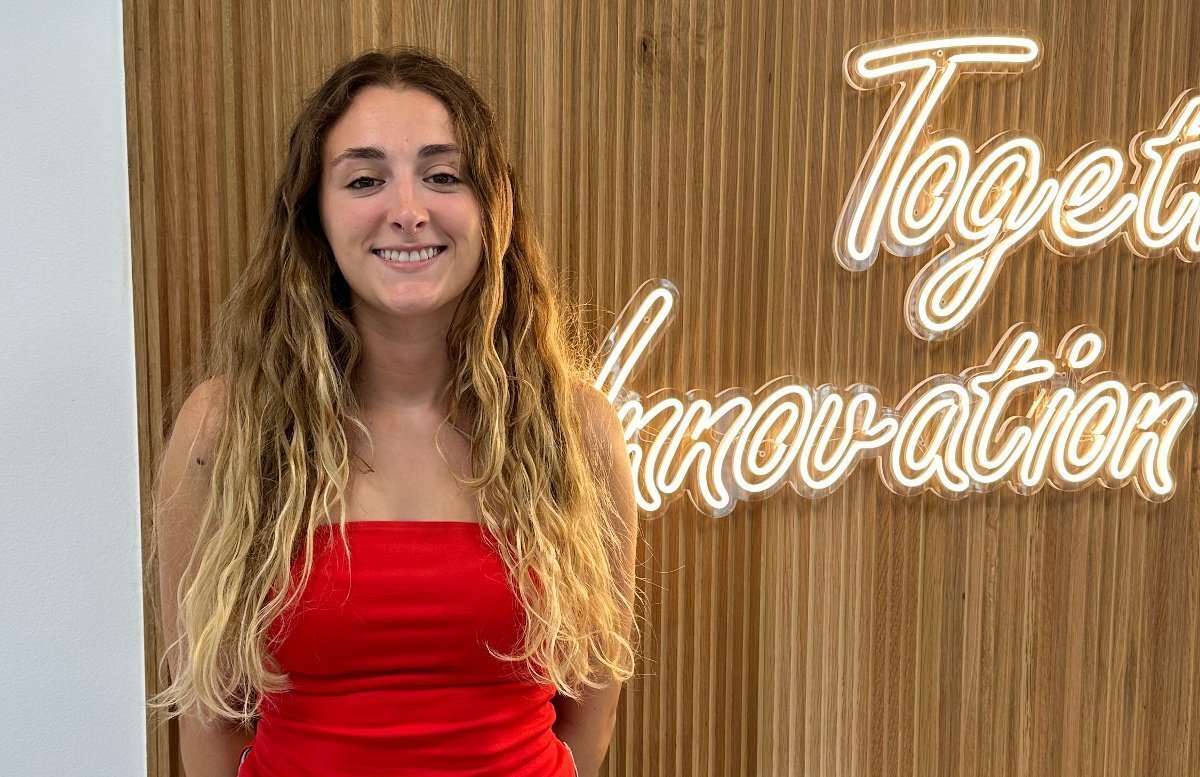
In this interview, we speak with Nerea Clemente Rodríguez, European Project Manager at Zabala Innovation, who supports the coordination and implementation of DocTIS.
Hola, Nerea. Please tell us about yourself.
Hola! I am Nerea Clemente Rodríguez, and I work as a European Project Manager in the health sector at Zabala Innovation, based in Barcelona.
I hold a Bachelor’s Degree in Biochemistry from the Universitat Autònoma de Barcelona, as well as two Master’s degrees: one in Health and Science Management and another in Bioinformatics and Biostatistics from the University of Barcelona and the Universitat Oberta de Catalunya.
My career has gradually evolved from laboratory research and clinical environments into international project coordination. I became interested in research during my academic training and early experience in hospitals and research institutions, and later specialised in how data can be used to improve healthcare decision-making and patient outcomes.
This background helps me better understand projects like DocTIS. At Zabala Innovation, I manage European collaborative projects in the health sector, supporting their design, coordination and implementation across academic institutions, hospitals and industry partners.
How did you become involved in the DocTIS project?
I became involved in the DocTIS project through my role at Zabala Innovation, where I support European research and innovation projects in the health sector. I was not hired specifically for DocTIS, but joined as part of my work managing collaborative projects funded at the European level.
What attracted me most to DocTIS was its multidisciplinary approach and its strong focus on generating clinically relevant impact. The combination of systems biology, data-driven methodologies and clinical application to improve treatment strategies in complex diseases makes it a very innovative project.
I was particularly interested in contributing to a project that goes beyond theoretical research and aims to optimise therapeutic strategies for patients.
What is your role within DocTIS?
Within DocTIS, my role focuses mainly on project coordination and management. In simple terms, I help ensure that the project runs smoothly and that all partners are aligned and progressing according to the planned objectives.
My work includes facilitating communication across the consortium, coordinating timelines and deliverables, and making sure that the different activities are properly structured and connected. I also contribute to preparing reports and documentation required by the European Commission.
By supporting organisation and alignment across such a complex project, I help ensure that scientific results can move forward effectively towards their final objective.
What has been your biggest challenge so far?
One of the biggest challenges has been working with a large and diverse consortium, involving partners from different institutions, disciplines and countries.
Each partner operates with different timelines, priorities and approaches, and bringing all these perspectives together into a coherent workflow can be complex. Ensuring steady progress, meeting deadlines and maintaining clear communication requires constant follow-up and adaptability.
This is particularly relevant in a project like DocTIS, where collaboration between computational scientists, clinicians and researchers is essential to connect data, modelling and clinical application.
What does it mean for you, as an early-career researcher, to see your work potentially translated into clinical trials or patient care?
Even though my role is focused on coordination rather than research itself, it is very motivating to contribute to projects that have a clear pathway towards clinical application.
Being involved in DocTIS has helped me understand how complex this process is, from early research stages to potential translation into clinical trials and patient care. My role is to support the structure that enables this to happen.
What I find most meaningful is knowing that the work we support is not only generating knowledge, but also has the potential to improve treatment options for patients who currently have limited alternatives.
How has working in a European consortium influenced your development as a researcher?
Working in a European consortium has broadened my perspective on how research is carried out at an international and multidisciplinary level.
Through my role, I have collaborated with academic institutions, hospitals and other stakeholders, each contributing different expertise and ways of working. This has helped me understand how diverse disciplines come together to address complex health challenges.
It has also strengthened my communication skills and given me a clearer view of how research evolves from early stages to potential clinical application.
How do you think DocTIS could impact patients in the future?
DocTIS has the potential to significantly improve the treatment of patients with immune-mediated inflammatory diseases by identifying more effective combinations of existing therapies.
Many patients do not respond adequately to current treatments or lose response over time. By focusing on synergistic drug combinations, DocTIS aims to improve treatment efficacy and provide more sustained disease control.
Importantly, the project is progressing towards clinical validation, which increases its potential to deliver tangible benefits for patients.
What key lessons have you learned from being part of DocTIS?
One of the main lessons I have learned is how critical communication and alignment are in large-scale collaborative projects.
Working with multiple partners has shown me that successful research depends not only on scientific excellence, but also on how well teams are coordinated and how effectively challenges are addressed.
I have also learned the importance of maintaining clear communication with the European Commission and ensuring that the project progresses in a structured and transparent way.
Where do you see your research career heading in the future?
I see my career continuing at the intersection between biomedical research, data and project strategy.
I am particularly interested in roles where I can support complex research initiatives, helping to translate scientific ideas into structured and impactful outcomes.
If you were not working in research, what career path do you think you would pursue?
In my case, I have already chosen not to work directly in research, but to contribute from a more strategic and coordination-oriented perspective.
I see myself continuing to work closely linked to science, supporting innovation and helping research reach its full potential.
As highlighted through Nerea’s role, DocTIS relies not only on scientific excellence but also on strong coordination and collaboration across all partners to ensure that the project progresses effectively and delivers meaningful results.
Coordinated by the Vall d’Hebron Research Institute, VHIR (Sara Marsal), the project brings together Cardiff University (Ernest Choy), the University of Verona (Giampiero Girolomoni), Charité – Universitätsmedizin Berlin (Britta Siegmund), the Institut d’Investigacions Biomèdiques August Pi i Sunyer, IDIBAPS (Pere Santamaria), the National Center for Genomic Analysis, CNAG (Holger Heyn), IMIDomics Inc. (Manuel Lopez-Figueroa), HudsonAlpha Institute for Biotechnology (Richard M. Myers) and Zabala Innovation, each contributing their expertise to improve the understanding and treatment of immune-mediated inflammatory diseases.