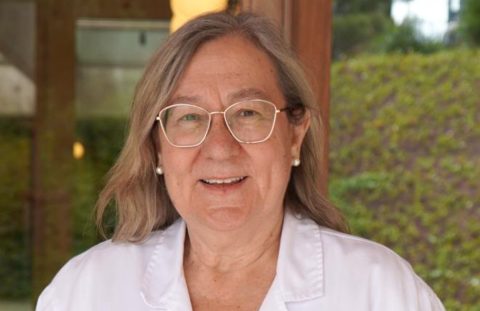
Dr Sara Marsal: “The most important legacy of DocTIS will be the approach rather than any single result”
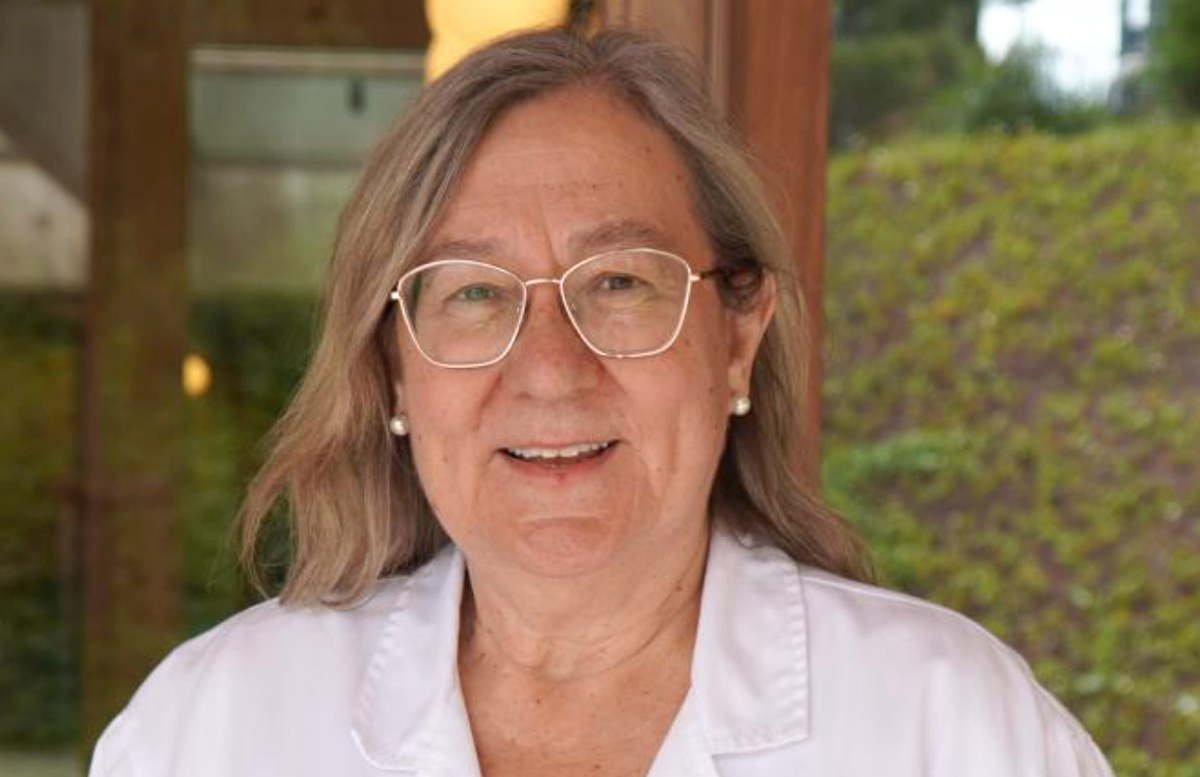
Over more than six years of research, DocTIS has followed an ambitious question: can a deeper understanding of the molecular differences between patients help identify more effective combinations of existing therapies for immune-mediated inflammatory diseases (IMIDs)?
Throughout this journey, researchers have studied six IMIDs, generated and analysed extensive molecular and clinical data, developed computational approaches to predict promising drug combinations, tested them in preclinical models and ultimately brought one of these therapeutic hypotheses into clinical testing.
At the centre of this journey has been Dr Sara Marsal, Head of the Rheumatology Department at Vall d’Hebron University Hospital and leader of the Rheumatology Research Group at the Vall d’Hebron Research Institute (VHIR). VHIR has coordinated DocTIS since its launch, combining this leadership role with a central scientific contribution based on its expertise in IMIDs, its deeply characterised patient cohorts and the IMID Biobank. As project coordinator, Marsal has overseen the scientific development of DocTIS and the collaboration between specialists from different disciplines and institutions.
In this final interview with the Principal Investigators of DocTIS, Marsal reflects on the origins of the project, the scientific and operational challenges encountered along the way, the decisions that shaped its development, the transition from computational predictions to clinical testing and the legacy she hopes DocTIS will leave behind.
Hola, Sara! Please tell us about yourself.
Hola! I am a rheumatologist and clinical researcher at Vall d’Hebron University Hospital and Vall d’Hebron Research Institute in Barcelona. I have been Head of the Rheumatology Department since 2017, and I lead the Rheumatology Research Group, which I founded in 2004.
My career has focused on immune-mediated inflammatory diseases, particularly rheumatoid arthritis, and on understanding why patients with apparently the same disease respond so differently to treatment. This led me from clinical research into genetics, genomics, biomarkers and, eventually, systems biology and precision medicine.
Over the years, I created the IMID Consortium and IMID Biobank at VHIR, bringing together clinicians across different specialties and building deeply characterised patient cohorts. I also co-founded IMIDomics Inc.. DocTIS is a natural continuation of this trajectory: using molecular knowledge of patients to improve therapeutic decisions.
What initially drew you to the DocTIS project?
DocTIS grew out of a question that had been with me for many years: why can the same treatment work extremely well in one patient and fail in another with apparently the same disease?
Through our previous work, we had accumulated extensive clinical and molecular information on treatment response. The next question was whether we could use this knowledge not only to select a treatment, but to identify rational combinations of existing targeted therapies and the patients most likely to benefit from them.
That became the central idea of DocTIS: to use systems biology to turn our understanding of treatment response into new therapeutic strategies and test them experimentally and clinically.
As project coordinator, what has been your overarching vision for DocTIS from the beginning?
My vision was to demonstrate an end-to-end strategy for precision medicine in IMIDs, rather than simply identify an interesting drug combination.
This determined how we built the DocTIS consortium. We brought together clinicians, genomics and single-cell experts, computational scientists, immunologists, preclinical researchers and clinical trial specialists. None of these components would have been sufficient alone; the real value was in connecting them.
We also deliberately worked across six IMIDs, looking for both shared and disease-specific mechanisms. Throughout the project, the clinical question remained our reference point: could the knowledge we were generating ultimately lead to a better therapeutic strategy for patients?
Beyond coordination, what has been the biggest scientific or operational challenge for you and your team?
Scientifically, one of our biggest challenges was generating high-quality molecular data with technologies that were cutting-edge when we designed DocTIS, particularly single-cell RNA sequencing of PBMCs, and then integrating these data with other omic layers and detailed clinical phenotypes. Generating data is one thing; integrating complex datasets to produce robust, biologically meaningful and actionable information is much more difficult.
Operationally, the challenge was the interdependence of the project. Each stage depended on the previous one, so delays or problems could propagate through the entire programme. COVID-19 added enormous complexity, followed later by regulatory and clinical trial challenges.
Maintaining close communication and ensuring that information moved effectively between teams was therefore essential.
Looking back, what have been the most critical decisions you have had to make as coordinator?
The most critical decisions were about when we had enough evidence to move from discovery towards clinical translation. At some point, you have to converge.
We had to prioritise among different signals and decide which therapeutic combination had sufficiently consistent computational, biological and experimental support to move forward. We also had to decide in which diseases a clinical proof of concept was scientifically justified and feasible, ultimately focusing the trial on rheumatoid arthritis and psoriatic arthritis.
There were also moments when we had to adapt the original plan because of scientific, regulatory or practical realities. My principle was to remain flexible about the route while protecting the scientific objective.
What results from the DocTIS project have been most satisfying for you?
For me, the greatest satisfaction has been seeing different lines of evidence converge.
We generated high-quality multi-omic and single-cell data, developed computational methods to predict therapeutic combinations, and obtained experimental evidence supporting those predictions. A particularly important moment was obtaining results from the animal models that supported the methodology we had developed. That gave us confidence that the computational predictions reflected meaningful biology.
And then came the moment when the first patient entered the DocTIS clinical trial. Something that had started as a scientific hypothesis had actually reached clinical testing. For me, that was a real ‘Yes, we did it’ moment for the whole DocTIS consortium.
The clinical trials with patients are ongoing. What are your expectations?
My main expectation is that the trial provides a rigorous proof of concept for the strategy developed in DocTIS. Of course, as a clinician, I hope that the combination can improve disease control in patients who have not responded adequately to existing therapy. But the significance goes beyond one particular combination.
We are testing a therapeutic hypothesis generated from patient-derived molecular data, computational prediction and experimental validation. Whatever the final outcome, the clinical data will tell us how well that approach translates into patients and what needs to be refined.
My team has also been directly involved in the clinical study and its implementation in Spain. As a rheumatologist, seeing the project reach patients is particularly meaningful because the original questions behind DocTIS came from the unmet needs we see in clinical practice.
What do you believe will be the lasting legacy of DocTIS?
I believe the most important legacy of DocTIS will be the approach rather than any single result.
We have established a framework for combining deeply characterised clinical cohorts, multi-omic and single-cell technologies, computational prediction and experimental and clinical validation. We have also shown the value of studying different IMIDs together rather than always remaining within traditional disease boundaries.
I hope this contributes to moving the field from trial-and-error treatment towards decisions increasingly informed by the biology of individual patients, including rational combination therapies when appropriate. DocTIS is not the end of that journey, but I believe it provides an important foundation for the next steps.
What key learnings do you take from the DocTIS collaboration?
One of my strongest learnings is that truly translational science depends as much on people and collaboration as it does on technology.
It has been a privilege to work with outstanding clinicians and scientists across the consortium. The PIs brought exceptional expertise, judgement and commitment, and over six years we developed the trust needed to discuss results openly, challenge each other and change direction when necessary.
I would particularly like to recognise the young researchers in all the partner institutions. Their talent, energy and dedication have been fundamental to DocTIS. Seeing people from very different disciplines learn from one another and grow scientifically has been one of the most rewarding aspects of coordinating the project.
Looking back after more than six years, what would you like DocTIS to be remembered for?
I would like DocTIS to be remembered not for one dataset or one drug combination, but for demonstrating a different way of developing therapeutic strategies in IMIDs.
We started from the biological heterogeneity of patients, used advanced technologies and multidisciplinary expertise to understand it, generated therapeutic hypotheses and took one of those hypotheses into clinical testing.
Equally important is the community that DocTIS has created. We have built collaborations across countries, diseases and disciplines and trained a generation of young researchers who are comfortable working across these boundaries. If both this scientific approach and these collaborations continue beyond the project, that will be a very meaningful legacy.
From its origins in the biological heterogeneity observed among patients with IMIDs to the clinical testing of a therapeutic hypothesis, DocTIS has connected clinical research, advanced molecular technologies, computational approaches and experimental validation within a single research strategy. The high-quality human samples, datasets, methodologies and collaborations developed throughout this journey now provide a foundation for further research into more precise and effective therapeutic approaches for IMIDs.
Funded by the European Union through its Horizon 2020 research and innovation programme, DocTIS has enabled researchers and clinicians from different countries and disciplines to work together towards this common objective. Its clinical trial continues this journey, testing in patients an approach built through more than six years of collaborative research.
Coordinated by the Vall d’Hebron Research Institute, VHIR (Sara Marsal), the DocTIS consortium brings together Cardiff University (Ernest Choy), the University of Verona (Giampiero Girolomoni), Charité – Universitätsmedizin Berlin (Britta Siegmund), the Institut d’Investigacions Biomèdiques August Pi i Sunyer, IDIBAPS (Pere Santamaria), the Centro Nacional de Análisis Genómico, CNAG (Holger Heyn), IMIDomics Inc. (Manuel Lopez-Figueroa), HudsonAlpha Institute for Biotechnology (Richard M. Myers) and Zabala Innovation.