Adrià Aterido: “Translating research into better patient care is like nurturing a plant: slow and patient, but rewarding upon reaching the clinic”
Making sense of the enormous amount of biological data generated in modern medicine is one of the key challenges in improving how complex diseases are understood and treated, particularly in the context of the six immune-mediated inflammatory diseases addressed in DocTIS. In this project, this challenge is approached by combining clinical information with large-scale molecular data to uncover patterns that can guide more effective therapeutic strategies.
At the Vall d’Hebron Research Institute (VHIR), this effort is articulated through the coordination of multidisciplinary work across the consortium, while also contributing clinical data and patient cohorts that are essential to understanding treatment response. This integrated approach brings together clinical, molecular and computational perspectives to explore new strategies based on combinations of existing therapies.
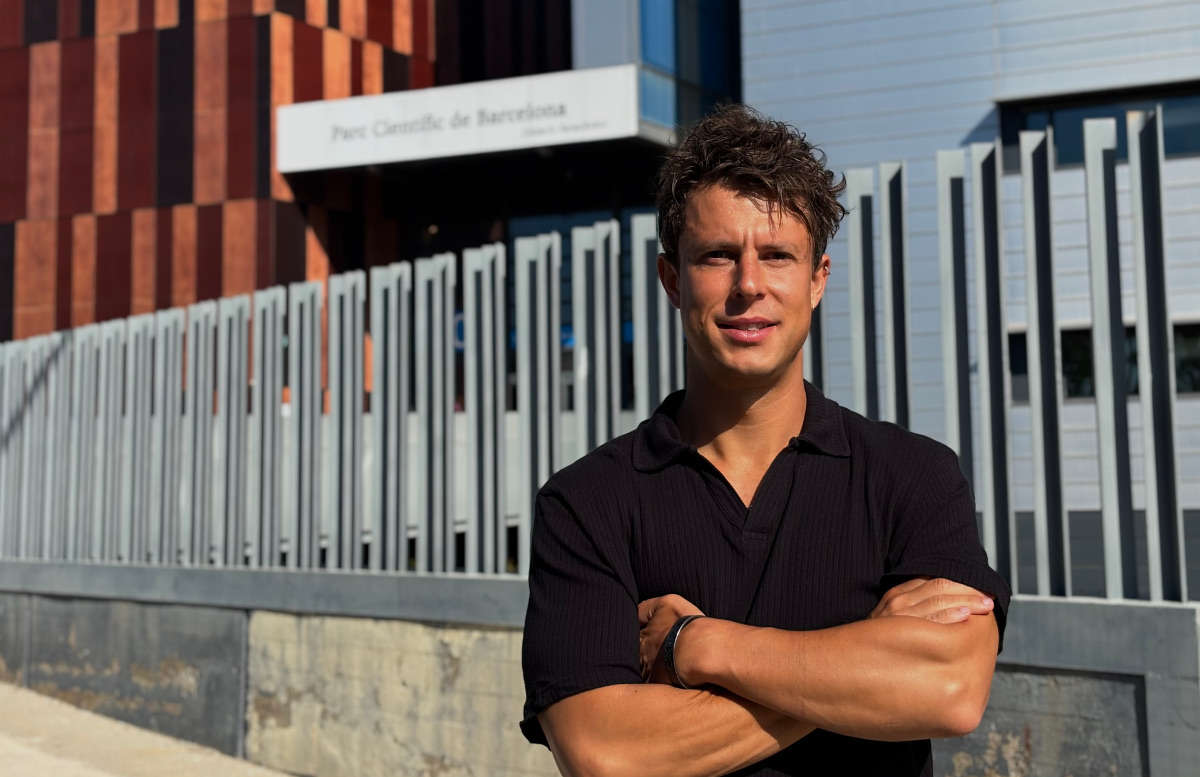
In this interview, as part of the DocTIS series highlighting early-career researchers, we speak with Adrià Aterido, Computational Biologist and postdoctoral researcher at the Rheumatology Research Group (GRR) at VHIR, whose work focuses on integrating multi-omics data to better understand disease mechanisms and identify new therapeutic opportunities.
Hola, Adrià. Please tell us about yourself.
Hola! I am currently working as a Computational Biologist and postdoctoral researcher at the GRR, Vall d’Hebron Research Institute, in Barcelona. My work focuses on analysing complex multi-omics data from samples of patients with autoimmune diseases, with a strong translational perspective, meaning that everything we do aims to ultimately improve diagnosis, patient management and treatment in the clinic.
I originally trained in Biotechnology at the Universitat de Lleida (2012), then specialised in a Master in Bioinformatics for Health Sciences (2014) and later completed my PhD in Biomedicine at the Universitat Pompeu Fabra (2019). During my postdoctoral training at the Rheumatology Research Group led by Prof Sara Marsal at VHIR, we have made significant contributions to the identification of molecular signatures associated with susceptibility, heterogeneity and treatment response in immune-mediated inflammatory diseases (IMIDs). This work has led to publications in leading medical journals within the fields of rheumatology and dermatology.
I usually say that we are trying to “decode” diseases. Every patient is slightly different, even if they share the same diagnosis. My work helps identify these differences by analysing large amounts of molecular information to understand what is really happening inside the patient and use that knowledge to find novel therapeutic opportunities.
What drew me to this field is not only its clear real-world impact, as these diseases affect millions of people worldwide, often throughout their lives, but also its unique position at the intersection of medicine and data analytics. This combination makes the work both intellectually challenging and deeply meaningful. I am particularly motivated by the opportunity to translate complex biological data into clinically actionable insights that can ultimately improve outcomes for IMID patients.
How did you become involved in the DocTIS project?
I became involved in the DocTIS project through my work at the Rheumatology Research Group. What really caught my attention was the opportunity to work on the identification of combinatorial therapies based on patient data, a cutting-edge approach that has been much more widely explored in fields like oncology, but much less so in autoimmunity.
It felt a bit like taking a proven idea and asking, “why not try this here too?” The possibility of bringing this strategy into IMIDs and offering new therapeutic options to patients who do not benefit from single-drug treatments was a strong motivation for me to get involved.
How would you explain your research in DocTIS to someone outside science?
I usually explain my research as trying to decipher the hidden mechanisms behind autoimmune diseases and understand how drugs actually work within that context.
In DocTIS, we analyse large amounts of data from IMID patients, including genes, proteins and cells, and connect that information to how they respond to treatments. What makes this especially interesting is that, instead of focusing on a single drug, we look at how combinations of existing drugs can work better together.
The idea is that, just like in real life, sometimes one solution is not enough, but the right combination can make a big difference. Many patients do not respond well to current treatments or lose response over time. By understanding the disease in more detail and testing smarter drug combinations, we aim to find more effective and lasting treatments.
In simple terms, it is about moving from single-drug treatments to more precise combinations tailored to specific patient groups.
What do you find most innovative about the DocTIS approach?
What I find most innovative about the DocTIS approach is how it integrates different types of data into a single framework, particularly by combining patient clinical response data with deep molecular profiling.
Rather than analysing molecular data in isolation, we directly link it to how patients respond to therapies, making the results much more relevant from a clinical perspective. This allows us to uncover insights that would otherwise remain hidden and to better understand how treatments work within the context of the disease.
What achievement within DocTIS has been most satisfying for you?
One of the most satisfying achievements has been generating strong molecular evidence supporting a specific drug combination that is currently being tested in an ongoing clinical trial.
Seeing our work evolve from complex data into clear, actionable insights is incredibly rewarding. It marks the moment when research moves beyond exploration and becomes truly translational, when you can clearly see a path toward improving patient care.
What does it mean for you, as an early-career researcher, to see your work potentially translated into clinical trials or patient care?
For me, it really feels like closing the circle of translational research. Science creates real value when it goes beyond publications and makes a difference in patients’ lives.
I see our work evolving from data and analysis into clinical trials, and ultimately into better patient care, as nurturing a plant: it takes time, care and patience, but when it finally reaches the clinic, it feels like harvesting something truly meaningful. That impact is what matters most to me.
How has working in a European consortium influenced your development as a researcher?
Working in a European consortium like DocTIS has been a very enriching experience. It has given me the opportunity to collaborate closely with experts from different disciplines, from clinicians to computational scientists, which has broadened both my technical skills and my perspective.
It has also exposed me to new methodologies, different types of data and diverse ways of thinking about the same problem. This kind of environment pushes you to step outside your comfort zone and communicate more effectively across fields.
How do you think DocTIS could impact patients in the future?
Beyond improving treatment strategies, I believe one of the biggest contributions of DocTIS could be paving the way for a broader adoption of combinatorial therapies in autoimmunity.
By identifying the most effective combinations of existing drugs and linking them to patient-specific responses, the project could help patients achieve better disease control more quickly and with fewer side effects. This would mean fewer flares, improved quality of life and a more predictable treatment journey.
From a healthcare perspective, this approach could also reduce the current trial-and-error process and contribute to more efficient use of resources.
Where do you see your research career heading in the future?
I see my career continuing at the intersection of medicine and data analysis, with a strong focus on translating research into real-world impact.
My experience in DocTIS has reinforced how important it is to bridge the gap between discovery and application. I am particularly interested in contributing to environments where scientific insights can be rapidly translated into precision medicine solutions that reach patients.
If you were not working in research, what career path do you think you would pursue?
If I were not working in biomedical research, I would probably be drawn to philosophy or endurance sports. Philosophy appeals to me because it is about asking deep questions and understanding complex systems, which is not so different from research. At the same time, endurance sports reflect discipline, resilience and continuous improvement, values that are also very present in scientific work.
Adrià’s work reflects how the integration of large-scale data analysis into biomedical research is reshaping the way complex diseases are understood and treated.
By connecting molecular information with clinical outcomes, DocTIS is contributing to a more precise and data-driven approach to therapy, particularly in rheumatoid arthritis, psoriatic arthritis, psoriasis, ulcerative colitis, Crohn’s disease and systemic lupus erythematosus.
Coordinated by the Vall d’Hebron Research Institute, VHIR (Sara Marsal), the project brings together Cardiff University (Ernest Choy), the University of Verona (Giampiero Girolomoni), Charité – Universitätsmedizin Berlin (Britta Siegmund), the Institut d’Investigacions Biomèdiques August Pi i Sunyer, IDIBAPS (Pere Santamaria), the National Center for Genomic Analysis, CNAG (Holger Heyn), IMIDomics Inc. (Manuel Lopez-Figueroa), HudsonAlpha Institute for Biotechnology (Richard M. Myers) and Zabala Innovation.