DocTIS research featured at international conference on single-cell omics and the Human Cell Atlas
On 19 February 2026, Dr Holger Heyn, Professor and Director of the Single Cell Genomics Laboratory at the Centro Nacional de Análisis Genómico (CNAG), and Principal Investigator of CNAG in the DocTIS Project, participated as a keynote speaker in the conference “Ómicas de célula única y el Atlas Celular Humano: redefiniendo la biología de precisión” (“Single-cell omics and the Human Cell Atlas: redefining precision biology”), held in Madrid and organised by Fundación Ramón Areces and Springer Nature. The meeting brought together international experts to discuss advances in single-cell and spatial omics technologies and the progress of the Human Cell Atlas (HCA), a global initiative to create reference maps of all human cells in health and disease.
From single-cell technologies to disease integration
In his lecture, “The power of a million cells”, Holger Heyn addressed how large-scale single-cell genomics is reshaping biomedical research. As a member of the Human Cell Atlas initiative, he discussed the transition from first-generation atlases based on single-cell RNA sequencing towards increasingly spatially resolved atlases capable of mapping gene expression within tissues at near whole-transcriptome resolution.
He also emphasised the importance of expanding diversity and global representation in future atlas releases, and of integrating disease datasets to strengthen clinical translation. In this context, immune cells were presented as dynamic indicators of pathological processes, with the potential to act as cellular biomarkers across multiple diseases.
DocTIS data supporting a cellular atlas of inflammation
The research presented at the conference was recently published in Nature Medicine under the title “Interpretable inflammation landscape of circulating immune cells” and is based on the analysis of more than 65 million blood cells from over 1,000 healthy individuals and patients across 19 different diseases. By combining large-scale single-cell genomics with advanced computational methods, the study provides new insights into how inflammation manifests across a wide range of pathological conditions, including immune-mediated inflammatory diseases, infections and certain cancers.
According to CNAG, this study represents the first cellular atlas specifically focused on inflammation, bringing together single-cell data from millions of blood cells across multiple disease contexts. By comparing immune cell states and gene activity patterns across diseases, the researchers identified molecular signatures associated with distinct inflammatory processes and disease progression.
Data and samples generated within the DocTIS Project were instrumental to this work. DocTIS partner institutions contributed well-characterised patients with immune-mediated inflammatory diseases (rheumatoid arthritis, psoriatic arthritis, axial spondyloarthritis, psoriasis, inflammatory bowel disease and systemic lupus erythematosus), together with high-quality biological material from the IMID-Biobank and associated clinical data. This contribution supported the large-scale, cross-disease analysis required to explore inflammatory processes at single-cell resolution and illustrates how data generated within DocTIS can be reused to support high-impact research beyond the immediate scope of the project.
Beyond sample provision, the structured clinical phenotyping and harmonised data collection within DocTIS strengthened the interpretability of the molecular findings. The integration of DocTIS-derived datasets with other disease contexts allowed researchers to position immune-mediated inflammatory diseases within a broader inflammatory landscape, highlighting both common pathways and condition-specific cellular states.
The study also explored the use of artificial intelligence models trained on the cellular atlas to learn patterns associated with disease. These models were used to examine how immune cell profiles could inform future diagnostic strategies, with further validation required before clinical application.
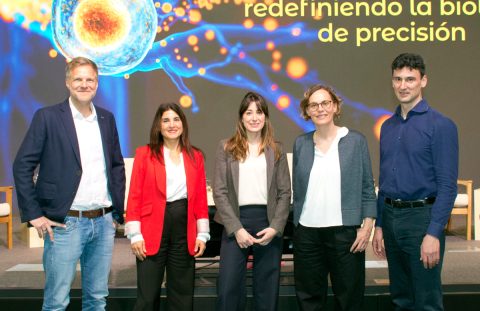
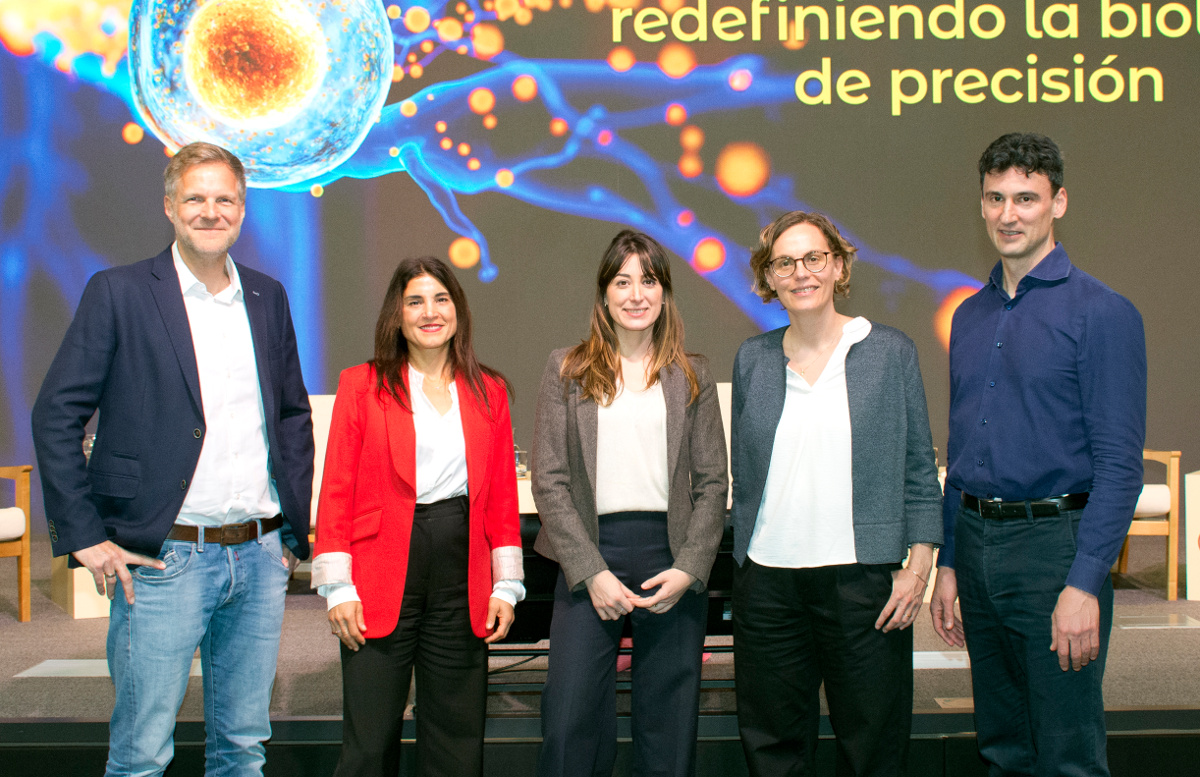
During the event, Dr Heyn shared the stage and participated in a round-table discussion with leading experts in the field, including Itai Yanai (New York University), Roser Vento-Tormo (Wellcome Sanger Institute and University of Cambridge) and María Colomé-Tatché (Ludwig-Maximilians-Universität München). The session was moderated by Erika Pastrana, Vice President of the Nature Research and Reviews divisions at Springer Nature.
The conference was attended by approximately 150 participants, mainly researchers and students, reflecting strong interest from the scientific community in the latest developments in single-cell and spatial omics technologies.
Through this presentation, the conference provided an opportunity to highlight how data generated within DocTIS contribute to international research initiatives such as the Human Cell Atlas. The integration of disease-specific datasets into large-scale reference initiatives reinforces the relevance of DocTIS in advancing the understanding of immune-mediated inflammatory diseases and supporting future translational research.
A recording of Dr Heyn’s participation is available here: